Engineering Geologic and Seismic Hazard Support
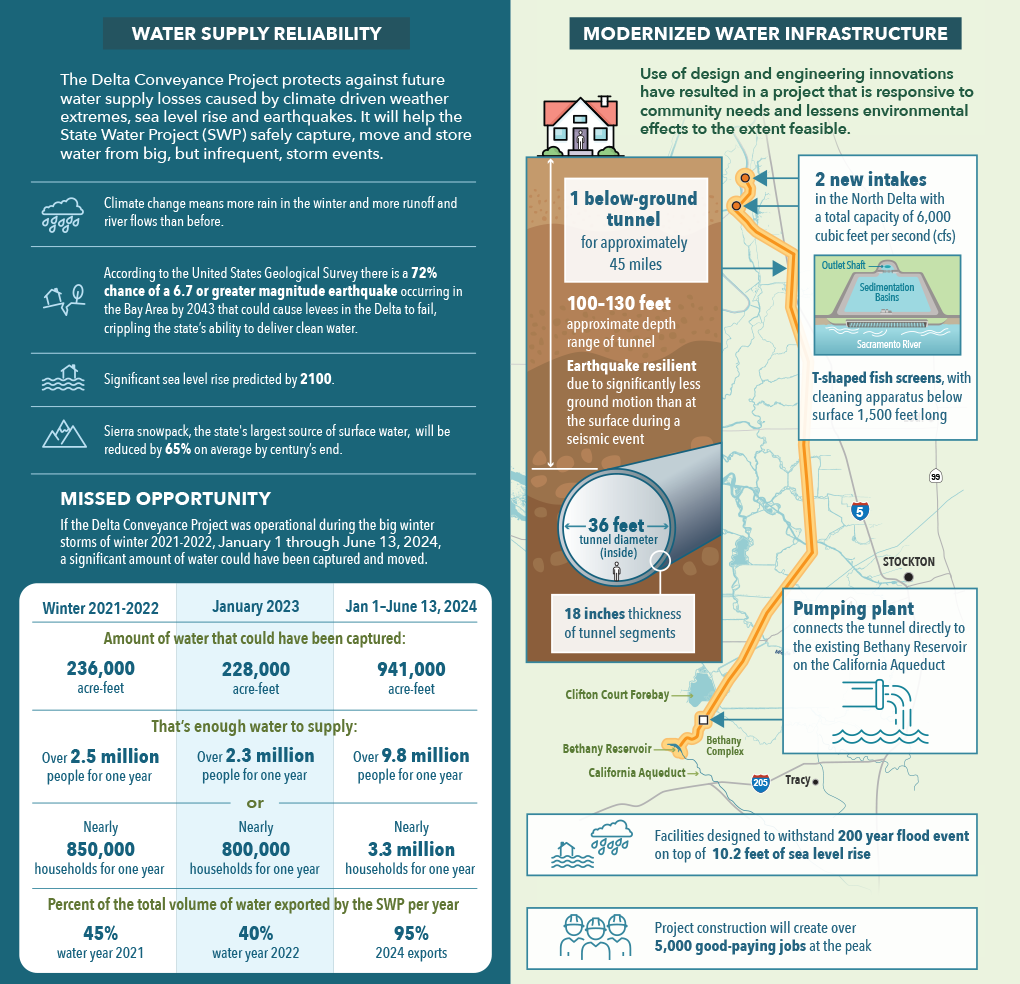
The Delta Conveyance Project is a major infrastructure initiative to modernize the State Water Project’s (SWP) water conveyance system through the Sacramento–San Joaquin Delta, the hub of California’s vital water distribution network. This region is critical to delivering clean, reliable water to over 27 million people and 750,000 acres of farmland, but is highly vulnerable to seismic activity, subsidence, and climate-driven weather extremes.
Located in the eastern portion of the San Francisco Bay Area, the Delta is part of one of the most seismically active regions in the U.S. The U.S. Geological Survey estimates a 72% probability of a magnitude 6.7 or greater earthquake in the Bay Area by 2043. The Delta itself contains multiple active fault systems, posing serious risks to aging water infrastructure. In response, the Delta Conveyance Design and Construction Authority (DCA)—under direction from the California Department of Water Resources (DWR)—is developing a tunnel-based conveyance system to increase the seismic resiliency of the SWP.
LCI is supporting this effort as part of the DCA’s geotechnical and geologic team. We are characterizing subsurface conditions and geologic hazards across the entire 45-mile tunnel alignment, including intakes, vertical shafts, and a pumping plant. Our geologists and modelers analyzed and interpreted data from over 1,700 borings and 800 cone penetration tests (CPTs), combining legacy datasets from prior investigations with new field data.
To visualize and assess these conditions, LCI built a high-resolution 3D geologic model using Leapfrog Works software. This model delineates sedimentary packages and structural features throughout the project corridor and serves as a foundation for design and risk assessments.
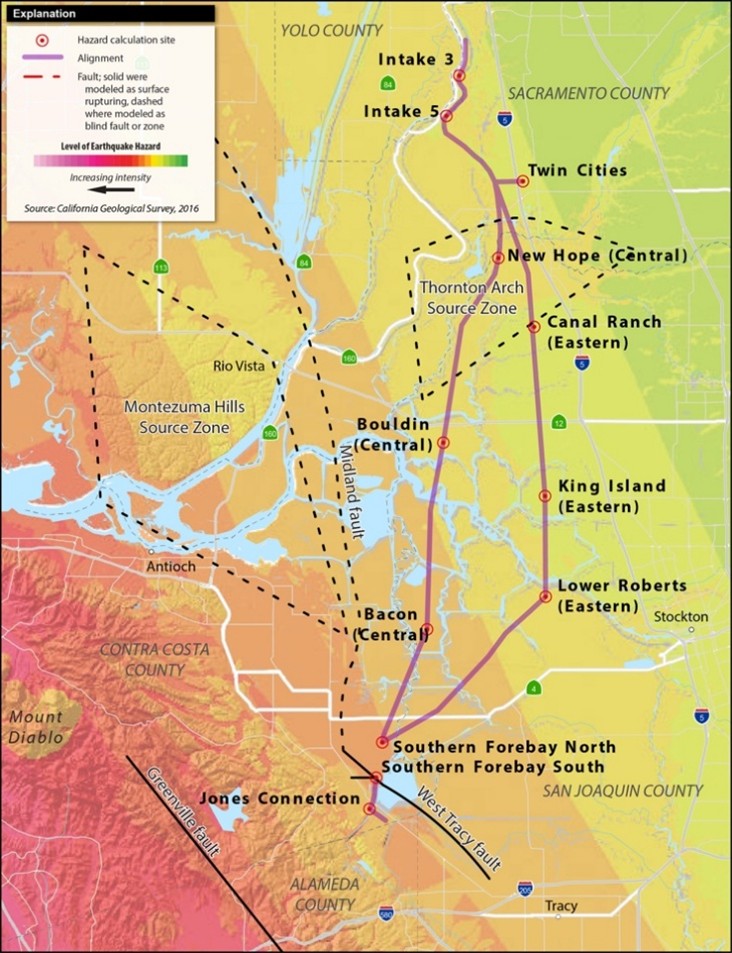
LCI conducted a probabilistic seismic hazard analysis (PSHA) that revealed variation in ground-shaking potential along the tunnel, with higher hazard in the southern Delta. We further evaluated buried and potentially active faults, including the West Tracy, Midland, and unnamed bedrock faults, through detailed tectonic geomorphic mapping, structural analysis, and fault displacement hazard assessments.
Key LCI Services:
- Analysis and Interpretation of Geotechnical Boring Data
- Development of 3-D geologic model (Leapfrog)
- Structural Geologic Analysis
- Tectonic Geomorphic Analysis and Mapping
- Seismic Source Characterization
- Probabilistic Seismic Hazard Analysis
- Probabilistic Fault Displacement Hazard Analysis
With deep expertise in California geology and seismic risk, LCI continues to provide the technical insight, modeling capabilities, and geologic interpretation needed to support the successful planning and design of this transformative infrastructure project.